
Keeping Kids in Schools: How School Psychologists Can Help
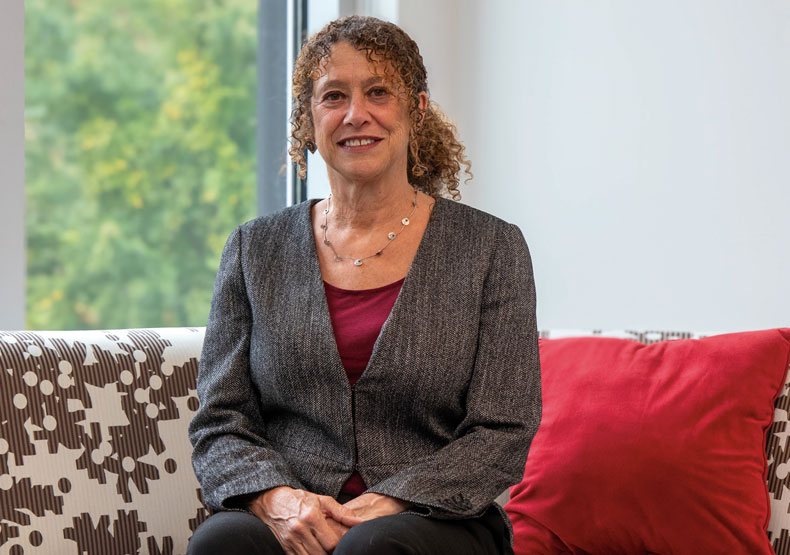
Elana Wolkoff, PhD, LEP, Associate Professor, and Associate Director of Field Education, School Psychology Department (Photography by Joshua Rizkall)
Faculty Viewpoint: Elana Wolkoff, PhD, LEP
Attending school is not only important for academic achievement, but also for developing social skills, confidence, critical thinking, and a sense of belonging. When children and adolescents miss a large percentage of school, they miss out on these important opportunities.
According to the United States Department of Education, chronic absenteeism is defined as students missing 10% or more of school. Across the country, 20 states have reported that more than 30% of their students missed at least three weeks of school in 2022-23. These rates go as high as 44% in Oregon and 47% in the District of Columbia. In Massachusetts, 23% of students fall into this category.
Dr. Elana Wolkoff, Associate Professor of School Psychology at William James College, has researched and addressed chronic absenteeism throughout her career. Wolkoff shares her expertise on why chronic absenteeism occurs and how school psychologists, teachers, and administrators can work together to get children the education they need.
Q. Can you tell me about your career and why you chose the field of school psychology?
A. I was always interested in education, psychology, and social justice and I didn’t know for a long time that there was a field that encompassed all three. I was really interested in what obstacles there were to kids’ learning and it just felt like there were so many things that were making it difficult for students to bring their full selves to the table. I had never heard of school psychology before, but when I discovered it, I was like ‘oh my gosh this really brings it all together,’ so I went back to school and became a school psychologist. And it really is an amazing field that focuses on how to increase equity and increase students’ ability to access their full selves, learn, and be successful.
Q. Can you explain chronic absenteeism and how it becomes a problem?
A. Multiple reasons have been identified for chronic absenteeism. One is aversions (things that happen in school that make it so that students don’t want to be there). Another is obstacles that stop kids from coming to school. Students might not have transportation, they’re homeless, they have family obligations such as translating for a parent at an appointment or babysitting. Sometimes there are things that compel students to stay at home. Maybe they are worried about a parent’s safety or perhaps they are addicted to video gaming. And then there’s just disengagement where kids come to school and they don’t feel like they belong—they don’t have a sense that school can bring them success in life and if it is also hard, what is the point? They just don’t go to school. The key is identifying the causes of each student’s absences and addressing them to the best of our ability. Along with identifying and addressing aversions, increasing student engagement while they are at school is the factor we can most easily influence by developing relationships with them and ensuring that they have a place in our schools.
Q. How would a school psychologist go about addressing some of these factors?
A. School psychologists are trained to do a lot of different things. We work with individual students to uncover the obstacles to their learning, but we are also trained to work on a broader level by consulting with teachers, working with administrators on school climate, and working with parents to bridge the gap between school and home. All of these components work together to understand what might be making school difficult for students. How can school become a welcoming place where all students feel held and supported, not just the ones who are most easily successful?
Q. How can school psychologists best collaborate with teachers and other school professionals?
A. There aren't enough school psychology positions or enough people going into the field as are needed, so school psychologists should be included in more systemic conversations. Supporting individual students is important, but when we consult on a regular basis with administrators, teachers, or the school nurse, we’re helping all the students they work with. If we can help the larger groups, we can be much more effective, understand the larger issues, and figure out how to be proactive in addressing them.
- Tags:
- In the Community
- Faculty
Topics/Tags
- Admissions Blog
- Faculty/Staff
- Alumni
- Students
- Partner Spotlight
- Expert Insights
- Press Release
- 50th Anniversary
Follow William James College
Media Contact
- Katie O'Hare
- Senior Director of Marketing and Communications
- katie_ohare@williamjames.edu
- 617-564-9389