
Growing Rhode Island’s Behavioral Health Workforce

Real-World Training, Mentorship, and Supervision
As workforce shortages place unprecedented strain on behavioral health systems nationwide, and a lack of diversity creates barriers to quality care, building a stronger, more representative workforce remains a priority. In Rhode Island, where nearly a quarter of residents live in communities designated as mental health professional shortage areas, meeting the need requires more than filling vacancies. It requires a pipeline of well-prepared, diverse behavioral health professionals who can strengthen the state’s workforce for years to come.
Since 2020, the Behavioral Health Service CorpsSM (BHSC) has helped build that pipeline. Now, a $500,000, three-year grant from the Rhode Island Foundation is supporting the launch and expansion of BHSC–Rhode Island, bringing William James College’s service-learning model to the state. Modeled after the Peace Corps, the program provides recent college graduates with paid placements in behavioral health settings, where supervision and mentorship help them develop the skills and connections to launch careers in the field—and, for many, in Rhode Island.
Real People, Real Impact
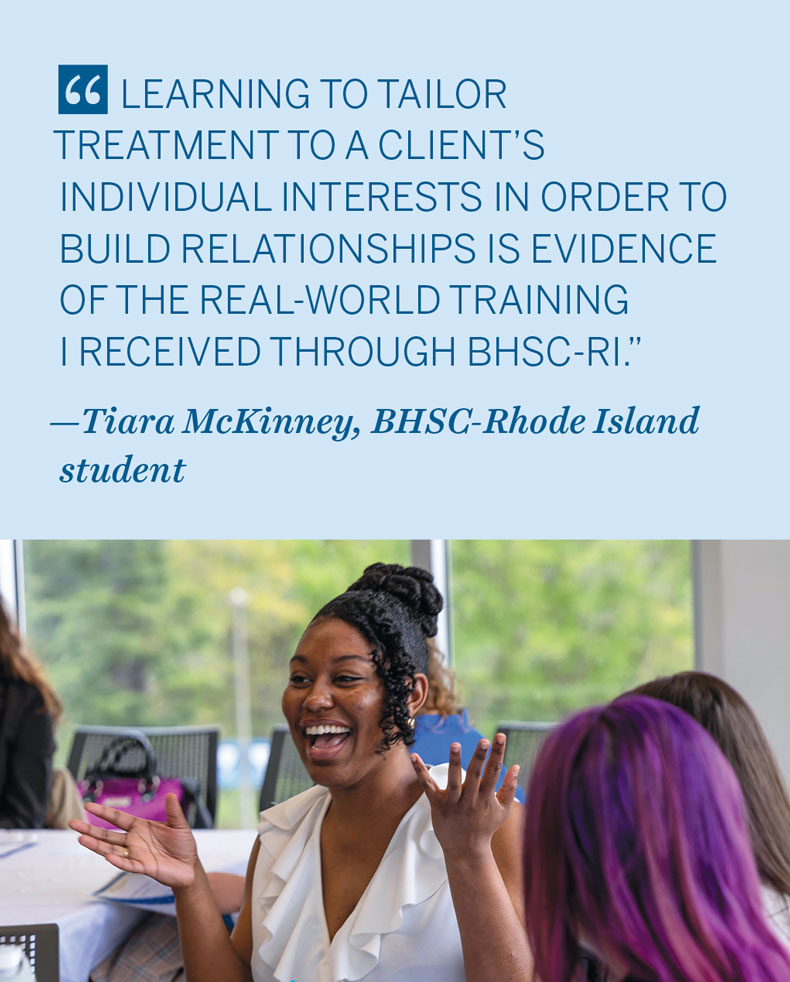 When Tiara McKinney relocated from rural Pennsylvania to join the BHSC–RI, she immediately
connected with downtown Providence’s vibrant, multicultural character. For the native
Bahamian and 2025-26 cohort member, the city’s friendly energy and coastal surroundings
felt remarkably like home. “The thriving immigrant community is a big part of why
I fell in love with Rhode Island,” says McKinney, whose passion for the field was
piqued by lingering stigma surrounding mental health in the Caribbean. After graduating
from Dickinson College with a BA in psychology and Spanish, McKinney sought opportunities
to further explore her interests before applying to graduate school. An emphasis on
providing care to underserved communities and understanding how culture shapes attitudes
toward mental health made William James College a natural fit.
“The BHSC-RI allowed me to explore and refine my interests through hands-on training in the field,” says McKinney, whose work as a behavior technician serving children ages 2–6 with autism spectrum disorder helped her discover a passion for individualized treatment. Through her mentorship with Damon Pryor, PsyD, McKinney became more comfortable advocating for herself and making her own needs a priority.
At Boston Behavioral Learning Centers (BBLC) in East Providence, one young client initially challenged McKinney’s confidence and ability to connect. Determined not to burden others, she initially took this testing period personally and carried the load alone. With encouragement from Pryor, McKinney adapted her approach, using the child’s love of active play to increase engagement while implementing the individualized treatment plan. By incorporating activities the child enjoyed into learning sessions, she built a strong rapport and ultimately became one of the child’s go-to behavior technicians.
“Learning to tailor treatment to a client’s individual interests in order to build relationships is evidence of the real-world training I received through BHSC-RI,” says McKinney who remains open to where that experience may lead.
Teamwork for the Win
 Mentorship and supervision, hallmarks of the Behavioral Health Service CorpsSM, give students the guidance and support they need to translate hands-on experience
into professional growth. At BBLC, Clinical Director Nakayla Raymond helped McKinney
identify professional goals, reflect on her performance, and recognize areas for continued
development.
“As Tiara’s supervisor, I saw her grow tremendously in her knowledge of basic applied behavior analysis principles, particularly in behavior reduction, and become more confident in running sessions independently and applying her skills,” says Raymond. Outside of work, McKinney and Pryor used active reflection to uncover blind spots, deepen trust, and build the professional autonomy she will need for her next chapter.
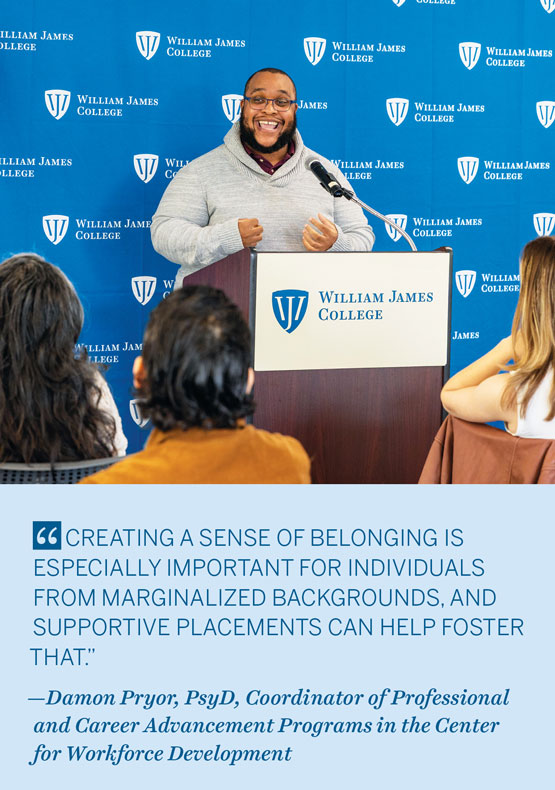
“Effective supervision really looks a lot like scaffolding,” says Pryor, coordinator of professional and career advancement programs in the Center for Workforce Development. He has seen firsthand the connection between strong placements and retention, particularly when students feel supported and can envision themselves building a career in the field.
“Creating a sense of belonging is especially important for individuals from marginalized backgrounds, and supportive placements can help foster that,” says Pryor. To date, more than 40% of total BHSC participants identify as Black, Indigenous, or People of Color, making supportive work environments especially critical to helping students see themselves as capable and valued members of the behavioral health workforce.
Workforce Development
Meeting Rhode Island’s growing demand for mental health services starts with expanding pathways into the behavioral health workforce. For Anna Ustun, MA, assistant director of Career Ladder and Training Programs, access and opportunity are the cornerstones of this work.
“At the heart of the Behavioral Health Service CorpsSM is a commitment to supporting students holistically and reducing barriers to entry by providing financial support, hands-on experience, professional development, and clear pathways for educational and career advancement,” says Ustun, underscoring the Center for Workforce Development’s model: programs that create meaningful pathways into behavioral health careers while responding to real workforce needs.
Partnerships connect students with communities and create opportunities to develop culturally responsive skills, professional networks, and meaningful experience. “It is incredibly rewarding to see students build confidence, complete their training in the BHSC, and move into roles and graduate programs where they can continue making a meaningful impact on the behavioral health workforce and the communities they serve,” says Ustun, whose leadership managing the program has been instrumental to its growth and success.
Paying it Forward
In mid-August, McKinney returned to the Bahamas with a clear purpose: to apply what she learned through BHSC–RI to reduce the stigma surrounding mental health in her home community. She plans to work in the public health sector for a year while applying to graduate programs in psychology.
“Of all the states I’ve visited, Rhode Island feels the most like home,” says McKinney, pointing to the vibrant Spanish-speaking community in her former Broad Street neighborhood, one of the capital’s most racially and ethnically diverse. Although she has left New England for now, McKinney carries her commitment to behavioral health with her, and remains open to returning.
“I could definitely see myself here in the future.”
- Tags:
- In the Community