
BHSC Partner Spotlight: Q&A with Tara Sagor, Senior Director of Training & Development, Justice Resource Institute
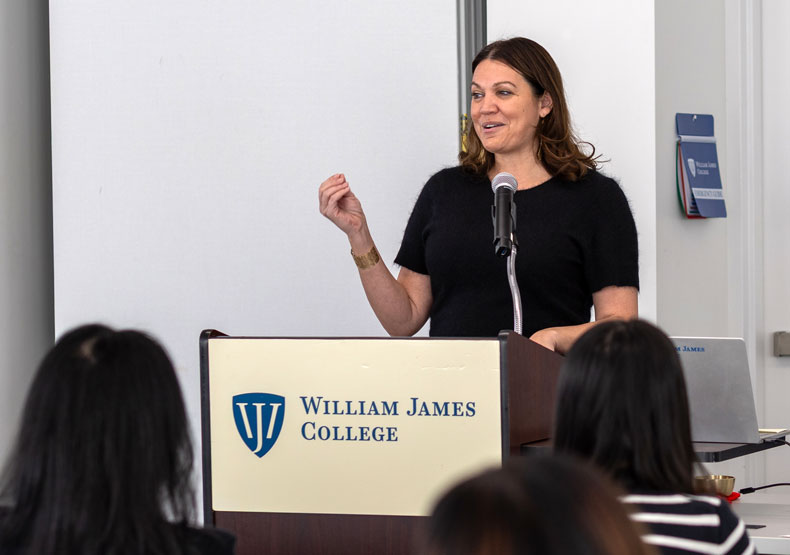
The Center for Workforce Development at William James College hosted the 2025 Behavioral Health Workforce Development Forum on December 5, 2025 on the topic: From Crisis to Sustainability: Innovative Solutions for Behavioral Health Workforce Development.
The event brought together professionals, educators, policymakers, and community leaders to address the pressing challenges facing today's behavioral health workforce. The Forum highlighted the transformative work of the Behavioral Health Service Corps and explored forward-thinking strategies to build a sustainable, culturally responsive, and future-ready workforce.
Tara Sagor, Senior Director of Training and Development at Justice Resource Institute, participated in a panel presentation: "From Shortage to Strength: Building a Culturally Diverse and Sustainable Behavioral Health Workforce." Her remarks are shared below.
What motivated Justice Resource Institute (JRI) to partner with William James College (WJC)?
JRI and William James College share similar core values: trauma-informed practice, social justice, community-based care, and a commitment to workforce development and underserved and marginalized populations. We saw a partner who understands the complexity of our clients’ lived experiences and the demands of clinicians who serve them and who wanted to work collaboratively to improve circumstances for both.
WJC brings deep expertise in evidence-based curricula and culturally responsive education and JRI brings real-world, high acuity environments where students can develop true clinical readiness. This partnership bridges the gap between academic preparation and frontline practice.
How has hosting WJC Behavioral Health Service Corps (BHSC) students impacted your organization’s talent strategy and culture?
We entered this partnership intentionally—not just to host students, but to cultivate a long-term talent pipeline for hard-to-fill roles across behavioral health. We recognized that the traditional recruitment landscape was not meeting the workforce shortage needs, so this became a part of our proactive solution.
William James College students bring enthusiasm, curiosity and fresh energy which invigorates our teams. Many bring lived experience, language skills and cultural humility that strengthen our ability to serve diverse communities, while also receiving additional training and supervisory support to help navigate the challenges in the field. This helps with retention and morale and has a positive impact on the overall culture within our programs.
What aspects of the partnership have been most valuable or unique?
One of the most valuable aspects of the partnership has been having consistent liaisons at WJC who understand JRI’s programs, culture and staffing needs. These relationships have improved placement process and have helped us problem solve early when a student is struggling emotionally or with role expectations. They’re accessible, respond quickly and partner with us to get the student the support they need to be successful.
This program is unique because it is not just about filling slots, it’s built on relationships, communication and a shared commitment to training the next generation of clinicians. The depth of this collaboration is rare and it’s a big reason why it has been so successful for JRI.
How does this collaboration contribute to workforce sustainability?
Workforce shortages in behavioral health are not temporary; they are systemic. The only sustainable solution is to grow our own workforce. This partnership with the WJC Behavioral Health Service Corps allows us to identify promising staff early, invest in their development, and ease the transition into more full-time educational programs/employment. It gives students the opportunity to explore the field before they are sure this is what they want to do. Many students choose to stay with us and continue to grow, while others might learn that they want to go in a different direction before making life-changing financial and time commitments.
Partnerships like this also ensure that our next generation of clinicians is trained in trauma-informed, strengths-based, and evidence-aligned care. The collaboration with WJC creates a workforce that is not only competent but is mission-aligned, which is the foundation for long-term sustainability and retention.
What advice would you offer to other agencies considering a similar partnership?
- Be clear about your goals and capacity. Consider why you want students and what roles they can realistically fill within your programs
- Match students intentionally, not just logistically. Consider age of population, level of care, program hours, mandate policies, etc. Thoughtful placement leads to better outcomes and higher retention.
- See this as a long-term workforce development strategy and not a one-year project or a short-term staffing help.
- Invest in a strong relationship with your WJC liaison and assign an internal point of contact for your agency if you are able to.
At the end of the day, this partnership allows us to grow the kind of workforce our communities deserve, and that makes the work worth every bit of the investment.
If your organization is interested in becoming a field partner, please contact workforce@williamjames.edu.
For future students, our Behavioral Health Service Corps is a unique gap-year experience, where you can gain hands-on experience, earn a salary, and get credit toward your master's degree. The BHSC program is offered in Massachusetts and Rhode Island. Learn more.
Topics/Tags
- Admissions Blog
- Faculty/Staff
- Alumni
- Students
- Partner Spotlight
- Expert Insights
- Press Release
- 50th Anniversary
Follow William James College
Media Contact
- Katie O'Hare
- Senior Director of Marketing and Communications
- katie_ohare@williamjames.edu
- 617-564-9389