
AI and the Future of Psychology
Exploring the Possibilities and Challenges of a Rapidly Evolving Technology
As artificial intelligence becomes increasingly capable of simulating aspects of human interaction, it raises fundamental questions about what the technology can and cannot do. In a field built on trust, connection, and human relationships, what matters most becomes what artificial intelligence cannot replace. As AI enters psychology education, practice, and research, William James College is exploring where it belongs, where its limits lie, and how to keep humans at the center of mental health care.
“As we seek to better understand what our students need to learn so they are prepared to care for and partner with clients who use artificial intelligence, we must acknowledge that the ground is not only unclear but also shifting dramatically and quickly,” says President Nicholas A. Covino, PsyD. Looking ahead, he sees the College serving first as a convener, with a conference in the works with the Department of Digital Psychiatry at Beth Israel Deaconess Medical Center, before bringing together area experts and developing competencies.
“We understand our responsibility as a college to develop expertise surrounding AI,” says Covino, pointing to areas from diversity to workforce development where William James College has helped shape curricula, define and assess proficiency, and prepare supervisors to evaluate professional readiness.
Three perspectives offer a closer look at how AI is changing the way future clinicians learn, practice, and prepare for what comes next.
EDUCATOR: How is AI changing the way you teach future clinicians?
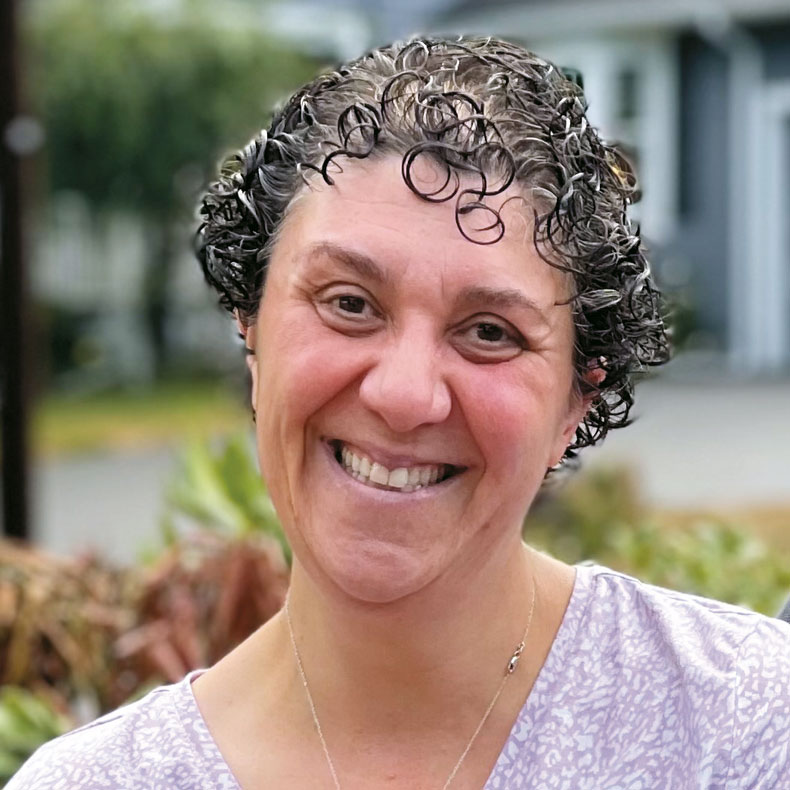 Since September, Jessica Stahl, PhD, has been using SkillSetter to help counseling students build confidence with specific
therapeutic approaches beyond the classroom. The simulation-based tool uses video
and AI chatbot practice cases, response recording, and competency-focused feedback
from AI, giving students a low-risk way to rehearse client interactions.
Grounded in deliberate practice, SkillSetter breaks clinical skills into manageable pieces, allowing students to practice, receive immediate feedback, and try again—an approach Stahl likens to parallel parking between cones in an empty parking lot versus on a busy street.
“The AI sims create consistent, low-risk opportunities for independent practice,” says Stahl. Along with mock sessions and role play scenarios, these learning tools give students a chance to hone their skills in a lower-stakes setting before working with real clients. They also create additional opportunities for feedback to complement what the instructor provides at a group level in class.
“When students practice skills online before they come to class—and get feedback from the AI tool, however imperfect it might be—they are able to identify areas for improvement and try again.”
PRACTITIONER: What happens when AI enters the therapy room?
 For Karen Stufflebeam, PsyD, the decision to incorporate AI into her private practice began with the same question
that guides her clinical work: Does this benefit the client? Given her view of AI
as an administrative support that increases her capacity for clinical care, Stufflebeam’s
answer was a clear yes.
“AI allows me to devote more time to preparing for sessions, developing individualized therapeutic homework, and staying current with psychological research and literature,” says Stufflebeam, who approached its implementation with transparency and respect for client autonomy.
When clients reveal an AI tool motivated them to seek therapy, Stufflebeam celebrates the win. Still, she is quick to clarify. “While AI can assist with documenting and summarizing what is said in a therapy session, it cannot replace the clinician’s training, clinical judgment, or ability to recognize the subtleties of human behavior and emotion,” she says, nodding to the person-centered training she received at William James College.
In her current role as Associate Director of Field Education in the Clinical PsyD program from which she graduated, Stufflebeam serves as a bridge between doctoral students and their training sites. Across each role, her stance is simple: Doctoral trainees need to develop a deep understanding of therapeutic tools, techniques, and clinical decision-making before using AI to enhance efficiency. AI can support the work, but it should complement—not replace—the foundational training and clinical judgment that define competent practice.
RESEARCHER: What does the research tell us about AI’s role in mental health care?
 Matthew Carper, PhD, has been studying digital mental health since 2007. Nearly two decades of research,
including work funded by the National Institute of Mental Health and the Society for
Science of Clinical Psychology, have made one thing clear: AI is here, and it’s here
to stay.
“The AI landscape is changing rapidly and is only as good as the training data,” says Carper. Because AI is trained on material from a field with a history of bias, Carper believes psychologists must think critically about how those biases may show up in AI’s outputs, recognizing nuances the technology cannot account for on its own.
When it comes to the next generation of psychologists, Carper sees AI as an adjunct to the training. “AI is a great tool. It doesn’t allow lay people to become experts in any given topic, but it does position experts on a given topic to become more effective at what they do,” says Carper, nodding to the real need: core competencies around what AI is and what its limitations are, which will position individual practitioners to come to their own conclusions about its ethical use.
For Carper, terminology matters. Calling AI a “large language model,” for example, better reflects the technology’s limitations. Rather than learn or know in the human sense, it is “trained on data” and “refined through feedback.”
“AI is where the future is headed, and we need to learn how to use it in a competent way that helps, not hurts, people and allows us to remain the experts in our field,” says Carper. His bottom line is simple: “Humans are not dependent on AI, but AI is dependent on humans.”
- Tags:
- Research & Advocacy