
Building a (Clinical) Foundation in the Field
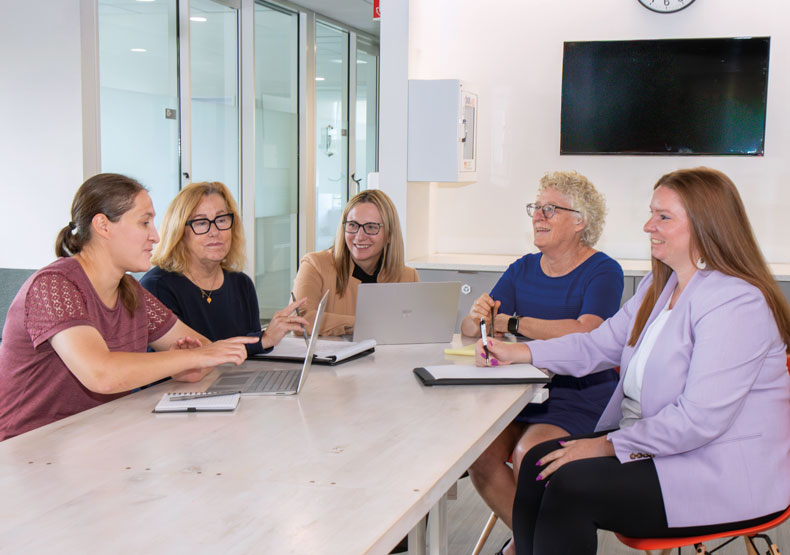
The Clinical Psychology Department Field Education team (L to R) Laura Bourgeois, MA, Department Coordinator, Field Education; Cheryl MacDonald, MBA, Associate Director of Programming and Site Development; Angela Wilbur, PsyD, Director of Training for the Clinical Psychology Department; Mary Ann Mullin, PhD, Director of Field Education for the Clinical Psychology Department; and Karen Stufflebeam, PsyD, Associate Director of Field Education for the Clinical Psychology Department (Photography by Joshua Rizkall)
Charting the Field Education Journey for Students in the Clinical Psychology PsyD Program
Matching Clinical PsyD students with hands-on learning and training opportunities is a perennial task for Mary Ann Mullin, PhD, and her colleagues in Clinical Field Education. As Director of the College’s largest field education department, Mullin ensures 500 students are placed in supervised clinical training experiences each year. “Our primary responsibility lies in developing relationships among students, faculty, and field sites,” says Mullin, pointing to a wide range spanning public, private, and therapeutic school settings; medical and psychiatric hospitals; private practices and testing centers; even forensic prisons depending on individual career interests and goals.
“The goal is to acquire building blocks along the way,” says Mullin of the five-year program. Students cover the lifespan in years one and two thanks to guidelines that require working with children and adolescents one year and adults the other. In later years, students are free to explore their individual interests at their advanced practicum or through our Consortium. By year five, students have a solid foundation of clinical skills for application at their APA Internship sites and in the world at large.
“Hands-on experience in the field is often what cements a student’s interest in working with a particular population,” says Mullin, who reminds students that while the path is intentional it is not always linear. “And that’s what makes the process so exciting,” she adds.
Read the stories of two students who used experiential education at diverse sites across the country to build a clinical foundation in the field.
Joshua Finney
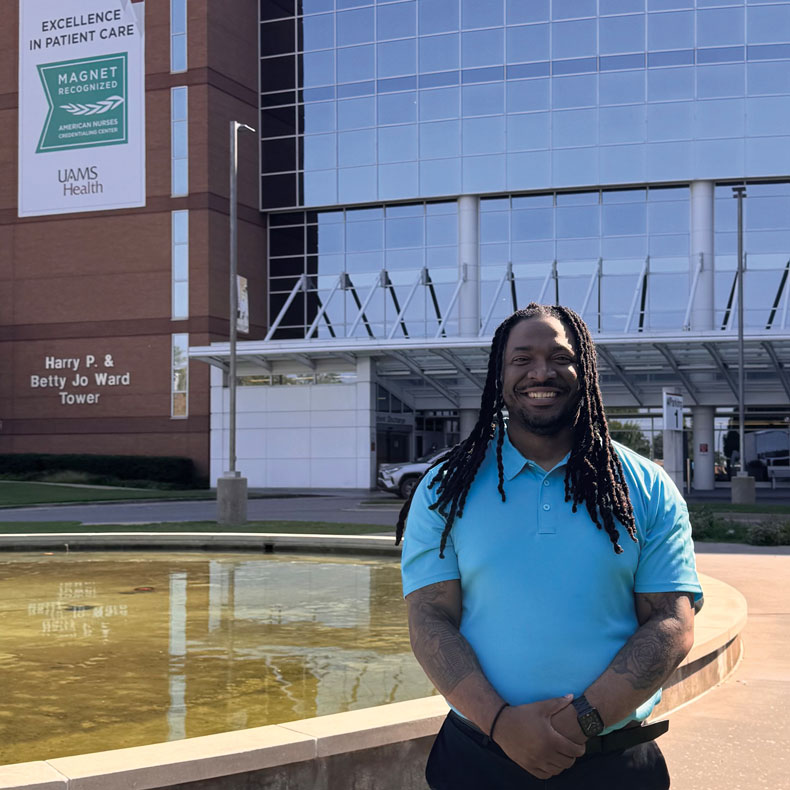
“Each field experience at William James College has allowed me to grow as a clinician through application of what I was learning in the classroom to daily work.”
— Joshua Finney, Clinical Psychology PsyD student
Joshua Finney, MA, was raised by a mother who sacrificed everything so her only child could chase his dream of becoming a board-certified clinical neuropsychologist. This summer, Finney commenced his APA internship year at the University of Arkansas for Medical Sciences in Little Rock, the Georgia native’s fourth and final placement after entering the program with a master’s in clinical psychology.
“Each practicum site has played a pivotal role in my development as a clinician,” says Finney who aspires to bring affordable behavioral healthcare to underserved communities. His inaugural placement at CBTeam provided hands-on training in the assessment and treatment of obsessive compulsive and anxiety disorders using the exposure therapy modality. There, Finney learned to sit in silence with patients and gleaned insight into the business acumen required to run a private practice and work with insurance companies. A concurrent clerkship with Sasheen Hazel, PsyD, a 2014 graduate of William James College, helped Finney lay a solid foundation for administering neuropsychological assessments and writing reports.
“I was exposed to tremendous resources on testing across the lifespan that strengthened my foundation,” says Finney, whose time at the Neuropsychological Evaluation Clinic (NAC) propelled him into the world of neuropsychology. While the work was physically, mentally, and emotionally demanding, it allowed him to cultivate a clinical voice which he took to Butler Hospital in Providence, Rhode Island. There, Finney provided community-based resources and education—about the impacts of neurodegenerative disease and learning disabilities on tasks from learning a second language to passing a citizenship eligibility test—to a largely Black and Hispanic population. Along the way, Finney added invaluable tools from efficient screening protocols to accurate means of diagnosis to his clinical tool belt.
In a world where in-person conversations are becoming obsolete, Finney remains laser-focused on connection. “Each field experience at William James College has allowed me to grow as a clinician through application of what I was learning in the classroom to daily work,” says Finney who remains committed to working one-on-one with individuals, free from distractions, to help them find a way forward.
Ananya Ruth Samuel
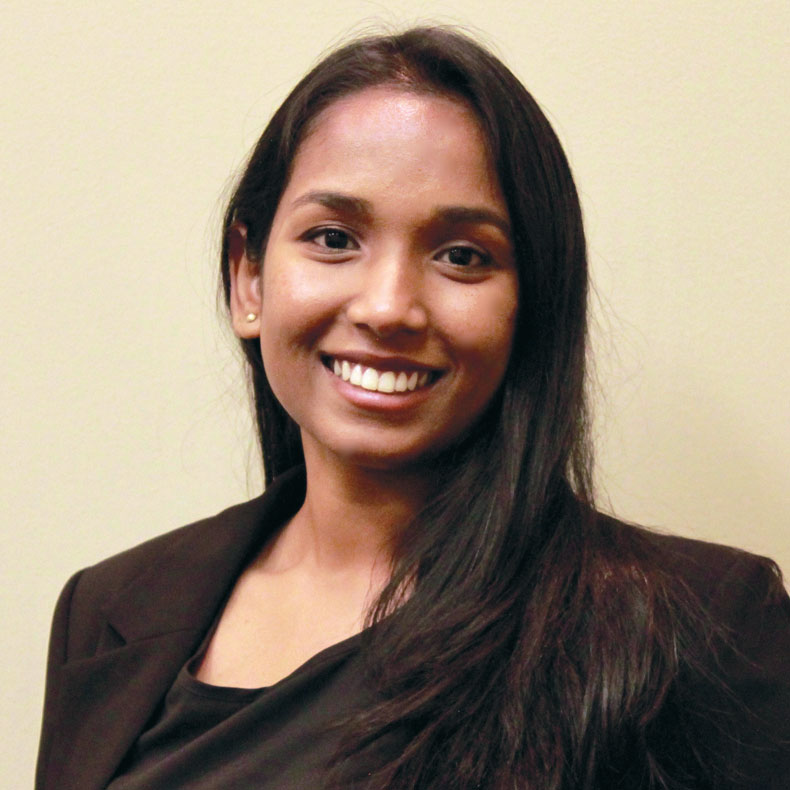
“As my professional communication and interpersonal skills grew, so did my confidence to work independently with patients.”
— Ananya Ruth Samuel, Clinical Psychology PsyD student
Ananya Ruth Samuel remembers feeling a strong sense of familial disarray when doctors could not explain the dementia-like confusion her grandmother was experiencing. It’s why providing clarity for patients and their families, with regard to diagnosis and treatment planning, remains top of mind for the aspiring clinical neuropsychologist during her APA-internship year at the Birmingham VA Health Care System in Alabama.
“The approach to cultivating clinical skills across practicum sites has been developmental and intentional,” says Samuel, whose time spent providing music therapy on a dementia special care unit piqued the undergraduate’s interest in brain behavior and cognitive functioning. Samuel was introduced to a range of testing modalities for students of all ages during her initial placement in the Taunton Public School District. She spent her second year at the Center for Brain/Mind Medicine at Brigham and Women’s Hospital in Boston assessing patients across the lifespan with a variety of neurological disorders, including dementia and epilepsy.
“While much of my field education was focused on neuropsychology, that is not the only training I got,” says Samuel, pointing to hands-on experience with cognitive behavioral therapy for individuals experiencing insomnia and group facilitation among individuals with attention-based difficulties. She counts learning to think on her feet and go with the flow—especially when interviewing patients and adapting the test battery—as fundamental non-clinical skills. Samuel used these building blocks to further hone her neuropsych skills at the Providence VA Medical Center in Rhode Island where she applied her clinical assessment and diagnostic skills. Her fourth placement, in the Cognitive Neurology Unit at the Beth Israel Medical Deaconess Center, positioned Samuel to apply her clinical skills in a cognitive rehabilitation group setting for individuals with memory issues.
“As my professional communication and interpersonal skills grew, so did my confidence to work independently with patients,” says Samuel. Coupled with ongoing support from dissertation chair Jason Osher, PhD, and assistant professor Tyler Zink, PhD, on-the-job experience has proven pivotal to Samuel’s experience.
“My graduate training has been full of learning opportunities,” says Samuel, who is currently applying for post-doctoral fellowships. “The opportunity to round out my clinical-growth areas in diverse settings has been invaluable.”
Topics/Tags
- Admissions Blog
- Faculty/Staff
- Alumni
- Students
- Partner Spotlight
- Expert Insights
- Press Release
- 50th Anniversary
Follow William James College
Media Contact
- Katie O'Hare
- Senior Director of Marketing and Communications
- katie_ohare@williamjames.edu
- 617-564-9389